
The Nepal Multiple Indicator Cluster Survey 2024–25, conducted by the National Statistics Office, found that 82% of Nepali households have internet access at home and 85.1% have a smartphone. This gives businesses more ways to reach customers, but digital access does not guarantee that people will recognise or remember a particular brand.
Building awareness requires a clear audience, a memorable message, consistent brand elements and regular exposure through suitable channels. As a Nepal-based PR and influencer marketing company, Influence Nepal helps businesses connect these elements with campaign planning and measurement.
This guide explains how to develop a practical brand awareness strategy in Nepal and improve it through a focused 90-day plan.
What Is a Brand Awareness Strategy?
A brand awareness strategy is a planned approach to helping a specific audience discover, recognise, remember and trust a brand. It defines who the business wants to reach, what people should remember and how progress will be measured.
A practical strategy should answer five questions:
- Who should know about the brand?
- What should they remember?
- Where can the brand reach them?
- What evidence will make the message believable?
- How will the business measure progress?
For example, a new restaurant in Kathmandu should not begin with a broad goal such as “become famous across Nepal.” A more focused objective would be:
Increase brand recognition among students and young professionals who live, study or work within five kilometres of the restaurant.
This objective identifies the audience, location and expected result. The restaurant can then choose suitable local channels and measure whether more people recognise or search for its name.
Brand awareness should support the overall direction of the business. Before investing in promotion, owners must understand their purpose, target audience, market position and promise. The complete brand strategy guide explains how these elements work together.
Why Brand Awareness Matters in Nepal

Official data shows that digital access is not equal across Nepal. The national survey found internet access in 86.5% of urban households and 73% of rural households. Provincial access ranged from 87.5% in Gandaki and 85% in Bagmati to 68.5% in Karnali. These differences show why the same awareness campaign may not work in every location.
Strong brand awareness can help a business:
- Enter the customer’s list of possible choices
- Become easier to recognise than similar businesses
- Build familiarity before asking for a sale
- Explain a new product or unfamiliar service
- Encourage branded searches and direct enquiries
- Support demand beyond short-term discounts
Imagine that a customer wants to buy a mobile phone. Several stores may offer the same model at a similar price. The customer may feel more confident considering a store they already recognise or have heard positive things about.
Awareness alone does not guarantee a sale. Price, product quality, availability, location, reviews and customer service still influence the final decision. Promotion may attract attention, but the product and customer experience must support the brand promise.
A business may need an awareness strategy when:
- The company or product is new
- Customers do not understand the offer
- Several competitors provide similar services
- The business is entering a new location
- Enquiries depend heavily on discounts
- Competitors are easier to find and remember
How Awareness Moves from Visibility to Trust
Brand awareness develops through different stages. People may see a business without recognising it, recognise it without remembering its name or remember it without trusting it. Each stage requires different content and measurement.
| Stage | What it means | Simple example | Useful measurement |
| Visibility | People are exposed to the brand | Someone sees a social media post | Reach and impressions |
| Recognition | People identify the brand when they see it | Someone recognises its colours or logo | Aided awareness survey |
| Recall | People remember the brand without seeing it | Someone names the brand when asked | Unaided awareness survey |
| Top-of-mind awareness | People remember the brand first | Someone names your restaurant first | First-answer percentage |
| Trust | People believe the brand can deliver | A customer considers the business reliable | Reviews, surveys and sentiment |
A campaign may report high reach, but reach only shows possible exposure. It does not prove that everyone noticed the message, understood the offer or remembered the brand.
Each stage requires a different approach:
- Visibility requires suitable distribution.
- Recognition requires consistent brand elements.
- Recall requires one clear and repeated message.
- Trust requires accurate claims and reliable service.
A complete strategy should help people move from seeing the brand to recognising, remembering and trusting it. Businesses should therefore measure more than followers, views and impressions.
Measure Your Current Brand Awareness

Measuring current awareness gives a business a baseline for future comparison. No single tool can reveal exactly how many people recognise or remember a brand, so businesses should combine surveys, search data, website activity and public mentions.
Run a Short Awareness Survey
Survey a comparable group of target customers using questions such as:
- When you think of this product category, which brands come to mind?
- Which brand comes to mind first?
- Have you heard of our brand?
- Where did you first hear about it?
- What do you remember about our brand?
The first question measures unaided recall, which means remembering a brand without receiving a list or clue. Asking whether someone has heard of the brand measures aided awareness.
Use these formulas:
Unaided recall rate
People who named your brand ÷ total respondents × 100
Top-of-mind awareness
People who named your brand first ÷ total respondents × 100
Repeat the survey using the same questions, audience criteria and collection method. Changing the sample or method can produce an inaccurate comparison.
Check Branded Searches
Google Search Console shows the search queries that caused a website to appear in search results. It also reports impressions, clicks and average positions.
Check queries containing:
- The brand name
- Common brand-name misspellings
- Unique product or service names
- The brand name with a location
- The brand name with “price,” “review” or “contact”
Compare branded impressions and clicks each month. An increase may indicate that more people are actively searching for the brand. However, Search Console hides some queries for privacy and only reports activity connected to the website’s appearance in search results.
Google Trends can also help compare changes in search interest over time. However, it reports relative interest rather than exact search volume. Search data should support—not replace—customer surveys.
Track Mentions and Website Activity
Monitor:
- News and media coverage
- Creator content
- Reviews
- Social media tags
- Untagged brand mentions
- Referral traffic
- Returning website visitors
- Contact-page visits
- Calls, forms and message clicks
Classify mentions as positive, neutral or negative. A brand may receive attention because of repeated complaints, so increased mentions are not always a positive result.
Direct website traffic can also include visits from untagged links. It should not be treated as a pure awareness measurement.
A useful brand awareness strategy connects the audience, objective, message, channels, budget and measurement plan. If one part is missing, a campaign may receive attention without building meaningful brand memory.
Step 1: Select One Clear Objective
Avoid broad goals such as “make our brand famous.” Choose a measurable result with a deadline.
Example objectives include:
- Increase aided awareness from 20% to 30% in six months
- Increase branded search impressions by 25% in three months
- Earn 15 relevant creator or media mentions
These are planning examples, not industry benchmarks. Every business should set targets using its own baseline, budget and market.
Step 2: Define the Target Audience
“People in Nepal” is too broad. Describe the group using details that affect its choices:
- Location
- Age range
- Language
- Income or budget
- Main problem
- Buying behaviour
- Preferred information channels
A clearer audience could be:
Kathmandu-based business owners aged 28–45 who need help promoting a new consumer product.
Step 3: Create a Positioning Statement
Complete this sentence:
For [target audience], our brand is the [category] that provides [main benefit] because [proof].
For example:
For local event organisers, our platform is an online ticketing partner that supports ticket sales, promotion and audience management in one system.
The proof may include a clear process, professional experience, verified results, qualifications or genuine customer reviews.
Step 4: Choose Recognisable Brand Elements
Select elements that customers can connect with the business over time. These may include:
- Logo
- Colours
- Fonts
- Tagline
- Packaging
- Tone of voice
- Sound or music style
Use these elements consistently across the website, social media, advertisements, events and printed materials.
Step 5: Develop One Main Message
The audience should be able to explain the brand in one short sentence.
Use this structure:
Customer problem → brand promise → supporting proof
Do not fill one campaign with several unrelated promises. A focused message is easier to understand and remember.
Step 6: Choose Three Content Themes
Three content themes can help a business publish regularly without losing focus:
- Education: Explain problems, choices and solutions.
- Proof: Show reviews, demonstrations, processes and results.
- People: Introduce the team, customers, creators or community.
Every content theme should support the same central brand message.
Step 7: Plan Owned, Earned and Paid Media
Owned media includes the website, blog, email list and social pages.
Earned media includes reviews, media coverage and unpaid recommendations.
Paid media includes advertisements, sponsorships and paid creator partnerships.
Owned media gives the business control. Earned media can strengthen credibility, while paid media can increase exposure. All three should communicate the same main idea.
Step 8: Set the Budget, Roles and Timeline
Set clear limits for:
- Content production
- Creator partnerships
- PR activities
- Events
- Advertising
- Monitoring and reporting
Assign people to approve content, answer customers, track results and manage possible problems.
Step 9: Prepare Tracking Before Launch
Set up:
- UTM links
- Creator-specific links or codes
- Campaign landing pages
- Baseline survey results
- Branded-search records
- Media-mention tracking
Tracking should begin before content is published. Otherwise, the team may see increased attention without knowing which activity produced it.
Choose Brand Awareness Channels in Nepal

The right awareness channel depends on the audience, location, message and business type. Nepal’s official digital-access data also shows why businesses should not assume that every customer uses the same platforms or has the same level of internet access.
| Business type | Potential channels | Suitable content |
| Restaurant or local shop | Social media, local search, Maps and local creators | Location videos, customer experiences and product stories |
| E-commerce business | Search, short videos, creators and paid campaigns | Demonstrations, comparisons and reviews |
| B2B company | Professional networks, search content, email, PR and events | Research, case studies and expert articles |
| Tourism business | Search, Maps, videos and travel creators | Destination guides and real travel experiences |
| Education company | Search, videos, social media and student creators | Course guides, outcomes and FAQs |
| National consumer brand | Social media, PR, retail, creators and events | Product education, regional stories and campaigns |
The largest platform is not automatically the best choice. Select channels according to where customers search for information, compare options and make decisions.
Social Media
Social media can help a brand repeat short messages, demonstrate products and answer customers. However, random posts rarely create strong brand memory.
A practical social media marketing strategy should define:
- Target audience
- Content themes
- Visual rules
- Posting purpose
- Response process
- Measurement method
Avoid publishing only greetings, posters and discounts. Use content that explains what the business does and why customers should remember it.
Search and Helpful Content
Search content reaches people who are already looking for information. Useful topics may include:
- How-to guides
- Buying checklists
- Price explanations
- Local guides
- Product comparisons
- Common customer questions
Each important article should include a clear author, useful sources and real knowledge of the topic. Content should answer the reader’s question instead of repeating keywords only for rankings.
PR, Events and Offline Promotion
PR can introduce a business through a story that matters to the public. Useful stories may involve:
- Original research
- Community projects
- Product updates
- Events
- Expert comments
- Industry changes
A press release should provide public value, not only advertise the company. The PR agency guide explains how businesses can use media communication more effectively.
Trade shows, workshops, campus events and product demonstrations can also build awareness. QR codes and campaign landing pages can connect offline activities with online measurement.
Combine Influencer Marketing and PR

Influencer marketing and PR can support different parts of brand awareness. Creators can explain a brand through familiar content, while PR can introduce the same message through a wider public story. Both activities should follow accurate claims and clear disclosure practices.
Nepal’s National Advertising Policy 2083 brings sponsored content, influencer marketing and AI-generated advertising within the formal policy framework. Policy 9.13 calls for mandatory self-declaration of sponsored content and influencer marketing on social media.
Select Creators by Relevance
Review:
- Audience location and age
- Content category
- Language
- Average views and watch time
- Quality of comments
- Previous partnerships
- Brand safety
- Ability to explain the offer
A smaller food creator with an active Kathmandu audience may be more suitable for a local restaurant than a larger general creator whose followers live in different locations.
Influence Nepal’s approach to influencer marketing in Nepal begins with the campaign goal and audience. The team then reviews creator category, content style, audience relevance and campaign suitability instead of depending only on follower count.
Prepare a Clear Creator Brief
A creator brief should include:
- Campaign objective
- Target audience
- Main message
- Correct product information
- Required content format
- Claims or words to avoid
- Publishing schedule
- Tracking link or code
- Approval process
- Disclosure instructions
Brands should also keep records of approved claims, agreements and published content.
Do not force every creator to read the same script word for word. Give creators room to communicate naturally while protecting the campaign’s key facts.
Connect Creator Content With PR
A combined campaign can follow this sequence:
- Develop a useful announcement, event or public story.
- Give selected creators the same main message.
- Publish PR and creator content within a planned period.
- Promote the strongest content.
- Track mentions, searches, visits and enquiries.
This creates several connected exposures instead of depending on one isolated post.
Make Your Brand Memorable in Nepal
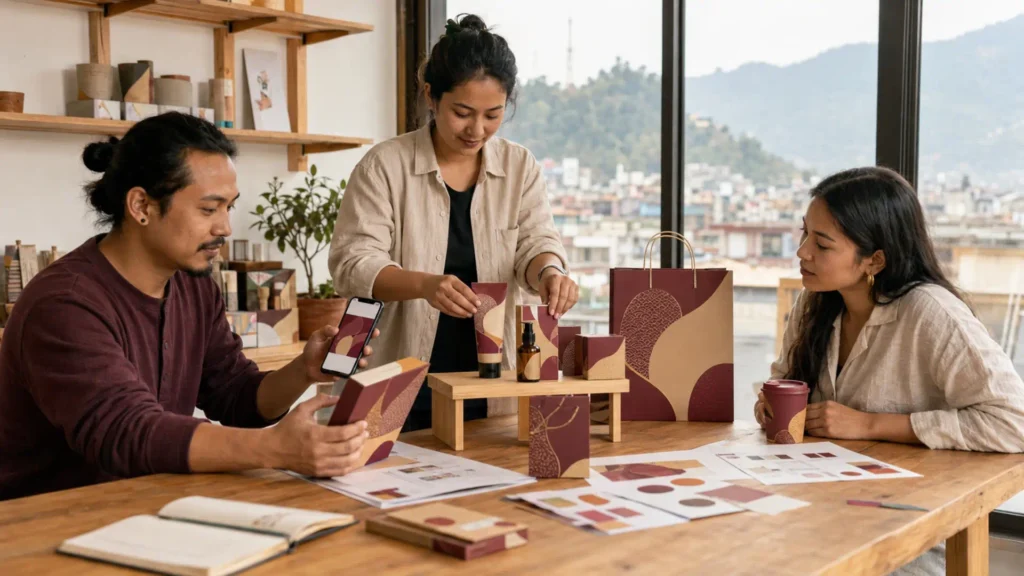
A memorable brand connects a consistent identity with a clear meaning. Repetition works best when the main promise remains stable while the format, example or story changes.
Keep One Clear Promise
Do not try to become the cheapest, fastest, most premium and most personal brand at the same time. Select the promise that matters most to the target audience and that the business can prove.
Use Natural Language
Depending on the audience, the message may use:
- Nepali
- English
- A natural Nepali-English mix
- A relevant regional language
Avoid direct translations that sound unnatural. Adapt the meaning to the way customers normally speak.
Build Local Relevance
Connect campaigns with genuine situations in Nepal, such as:
- Delivery conditions outside Kathmandu
- Local payment habits
- Dashain, Tihar and Teej buying periods
- Tourism seasons
- School and college admission periods
- Regional customer needs
Local relevance should be accurate and respectful. Do not use cultural traditions only as decoration or to attract attention.
Repeat Recognisable Elements
Use the same core logo, colours, tone and message across:
- Website
- Social media
- Advertisements
- Creator content
- Packaging
- Events
- Media materials
The story can change, but the brand should still feel familiar.
Give Customers Real Proof
Useful proof may include:
- Verified customer reviews
- Product demonstrations
- Named experts
- Transparent pricing
- Clear work processes
- Genuine case studies
- Answers to real customer questions
Never create false reviews, results or customer stories. False proof may attract short-term attention, but it can damage long-term trust.
Follow a 90-Day Brand Awareness Plan
A 90-day plan gives a business enough structure to research, launch and review a campaign. It is a testing framework—not a promise that every brand will achieve a fixed result within three months.
| Period | Main purpose | Key activities |
| Days 1–30 | Research and preparation | Define the audience, measure the baseline and prepare content |
| Days 31–60 | Launch and learning | Publish content, begin creator or PR work and test messages |
| Days 61–90 | Improvement | Support strong ideas, stop weak activities and measure progress |
Days 1–30: Research and Preparation
- Set one awareness objective.
- Define the target audience.
- Complete a baseline survey.
- Record branded search activity.
- Review competitor positioning without copying it.
- Create the main message.
- Select three content themes.
- Build a creator and media list.
- Set the budget and responsibilities.
- Prepare the tracking system.
Days 31–60: Launch and Learn
- Publish content on selected channels.
- Begin suitable creator partnerships.
- Contact relevant media outlets.
- Test two or three message formats.
- Run small paid tests when appropriate.
- Track mentions and audience responses.
- Record which content produces relevant visits and searches.
Days 61–90: Improve and Expand
- Stop content that attracts the wrong audience.
- Give more support to effective messages.
- Reuse strong ideas in new formats.
- Continue useful creator relationships.
- Repeat the original awareness survey.
- Compare the result with the baseline.
- Record what the team learned.
- Decide what to test during the next period.
Do not replace the whole strategy after one weak post. Look for patterns across several pieces of content and multiple sources of data.
Measure Brand Awareness Results

Brand awareness should be measured with several related indicators. Reach shows possible exposure, while surveys, branded searches and mentions provide better evidence of what people recognised or remembered.
| Stage | Suitable measurements |
| Exposure | Reach, impressions, views and estimated media circulation |
| Recognition | Aided awareness and logo recognition |
| Recall | Unaided recall and top-of-mind awareness |
| Interest | Branded searches, profile visits and website visits |
| Trust | Reviews, sentiment and survey answers |
| Action | Enquiries, forms, calls, trials and purchases |
Measure Share of Voice
Share of voice compares mentions of your brand with mentions of selected competitors.
Formula:
Your brand mentions ÷ total tracked category mentions × 100
Use the same keywords, platforms and period for every brand in the comparison.
Measure Creator Campaigns
Track:
- Unique reach
- Video views
- Average watch time
- Shares and saves
- Quality of comments
- Brand mentions
- Landing-page visits
- Link clicks
- Code use
- Audience location
- Positive and negative feedback
Do not depend only on engagement rate. A post can receive likes without helping viewers understand or remember the brand.
Ask Better Reporting Questions
Every monthly report should answer:
- Did more of the target audience see the brand?
- Did recognition or recall improve?
- Which message received the strongest response?
- Which channel reached the most relevant audience?
- Did branded searches increase?
- Did customer sentiment change?
- What should be repeated, changed or stopped?
Avoid Common Brand Awareness Mistakes
Many awareness campaigns produce activity without building useful brand memory. This usually happens when the audience is too broad, the message changes frequently or the business measures only surface-level numbers.
Targeting Everyone
A broad audience creates a weak message. Begin with the group most likely to need and understand the offer.
Choosing Creators by Follower Count
A large following may include the wrong location, age or interests. Review audience relevance, content quality and previous performance.
Changing the Message Too Often
Customers cannot remember a brand that presents a different promise and visual identity every week.
Copying International Campaigns
A campaign created for another country may not fit Nepal’s languages, geography, culture or payment habits. Learn from the general idea but adapt the execution.
Measuring Only Followers and Likes
These numbers may show attention, but they do not prove recognition, recall or trust.
Depending on One Platform
An algorithm change or account problem can reduce visibility. Build a website, search presence, customer list and media relationships as well.
Publishing Claims Without Proof
Unsupported claims reduce trust. Use accurate information, explain the process and link to credible sources.
Ignoring Negative Awareness
A business may become widely known because of complaints or misleading content. Monitor sentiment and address the cause of repeated criticism.
Running One-Time Campaigns
One creator post or press release is not a complete strategy. Brand memory requires planned and consistent exposure.
Frequently Asked Questions
What is a brand awareness strategy?
It is a plan for helping the right audience recognise, remember and trust a brand through consistent messages and suitable channels.
How long does it take to build brand awareness?
There is no fixed timeline. Review early progress after 30, 60 and 90 days, but continue building awareness consistently.
Which platform is best for brand awareness in Nepal?
No single platform is best for every business. Choose channels using customer research, campaign goals and previous performance data.
Is social media enough for brand awareness?
No. A stronger strategy may combine social media with search content, PR, reviews, creators, events and offline promotion.
Should a small business work with influencers?
Influencers can help when the creator reaches the right location and audience. Relevance and content quality usually matter more than follower count alone.
How can a business measure brand awareness?
Use awareness surveys, branded searches, website activity, media coverage, online mentions, sentiment and share of voice.